Case study · Sharebite: New stack. No freeze.
Legacy frontend migrated to modern Angular in about two months, without stopping feature development. Led a chapter of 12 developers.
AngularJS to Angular migration
The short version
Companies offer food benefits to their teams. Employees order through web and mobile apps.
AngularJS reached end of support in January 2022: growing risk and slower development.
Led the frontend chapter from November 2021, while staying hands-on as a developer.
Five decisions behind the migration
- 01Incremental migration, route by routeThe legacy AngularJS application was migrated to modern Angular area by area, so each migrated part was fully modern while feature delivery continued.
- 02Rebuilds where they made senseTwo Angular applications were rebuilt from scratch with a modern architecture, lazy loading, and clear state management, instead of carrying old structure forward.
- 03Tests as a safety netUnit tests (Jasmine/Karma) and end-to-end tests (Cypress) protect the important flows. End-to-end tests are especially valuable during a migration because they survive a framework change.
- 04Reliable deliveryImprovements to CI/CD pipelines make releases more predictable across applications.
- 05Web and mobileContributions to the React web application and development of two React Native mobile apps, under shared engineering standards.
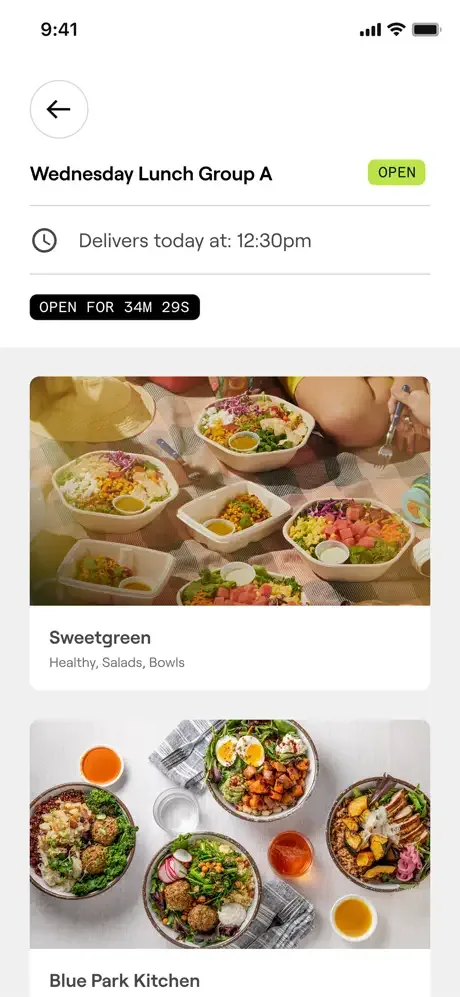
Group meals, on web and mobile
Relevant if you’re building
Modernization is a delivery challenge as well as a framework challenge. Incremental migration, selective rebuilds, automated testing, and shared engineering practices help teams continue delivering while architecture changes.
Built with Angular · React · React Native · TypeScript · Cypress
- Moving off a legacy frameworkStep by step, so the product keeps shipping during the move.
- A test safety net for big changesUnit and end-to-end tests that survive a framework change.
- A frontend team that needs standardsShared conventions, reviews and practices across apps.
- Web and mobile under one standardReact web and React Native apps built the same way.
Sharebite: Application Modernization & Engineering Leadership
-
Context
Sharebite is a corporate meal benefits platform for businesses across the United States. Companies use it to offer food benefits to their teams, and employees order through Sharebite's web and mobile applications.
The frontend is business-critical: it is how customers and their employees interact with the service every day.
-
The challenge
A large part of the frontend was built on AngularJS, a framework that reached end of support in January 2022. Staying on it meant growing risk, slower development, and an increasingly difficult codebase to work in.
Rewriting everything at once was not an option: the business needed new features to keep shipping throughout. On top of that, the product spans several web applications and mobile apps, so quality and delivery standards had to work across all of them.
-
My role
I joined Sharebite in November 2021 and led its frontend chapter of 12 developers as Chapter Lead, while staying hands-on as a software developer.
I drove application modernization, frontend architecture, and engineering standards across 5 web applications and 2 mobile apps, working closely with product, design, and QA.
-
The outcome
The legacy AngularJS application was migrated to modern Angular in about two months, without stopping feature development.
Two applications were rebuilt with a modern architecture, test coverage across the codebase reached over 95%, and the applications became noticeably faster and more stable to work with and to release.